From Cork to Edinburgh: A Secret That Changed Medical History
In 1809, a Cork student kept an extraordinary secret while training as an Edinburgh surgeon. 53 years later, the truth emerged. Stay where it happened.
This article contains gifted advertisement placement.
Two cities separated by the Irish Sea share far more than their "Second City" status. Cork and Edinburgh have been connected for over two centuries through medicine, architecture, and an enduring spirit of innovation that continues today.
The most remarkable link begins with a deception that changed medical history.
The Cork Student Who Became Edinburgh's Most Extraordinary Surgeon
In 1809, a slight young man named James Barry arrived in Edinburgh from Cork to study medicine at the University of Edinburgh. Barry excelled in anatomy, surgery, and botany, graduating with an MD in 1812 before joining the British Army as a Hospital Assistant.
The secret Barry carried would only be revealed 53 years later, upon death in 1865: James Barry had been born Margaret Anne Bulkley in Cork around 1789.
Faced with the complete exclusion of women from medical education, the Cork merchant's daughter had assumed her late uncle's identity to access the gates of learning. Edinburgh, then the undisputed capital of medical education in the English-speaking world, became the crucible where this transformation was completed.
Barry's Edinburgh MD enabled a groundbreaking military medical career that reached the rank of Inspector General of Hospitals. Today, the Royal College of Surgeons of Edinburgh (RCSEd) claims Barry as part of their heritage, recognising this Cork-born pioneer in both LGBTQ+ and women's medical history
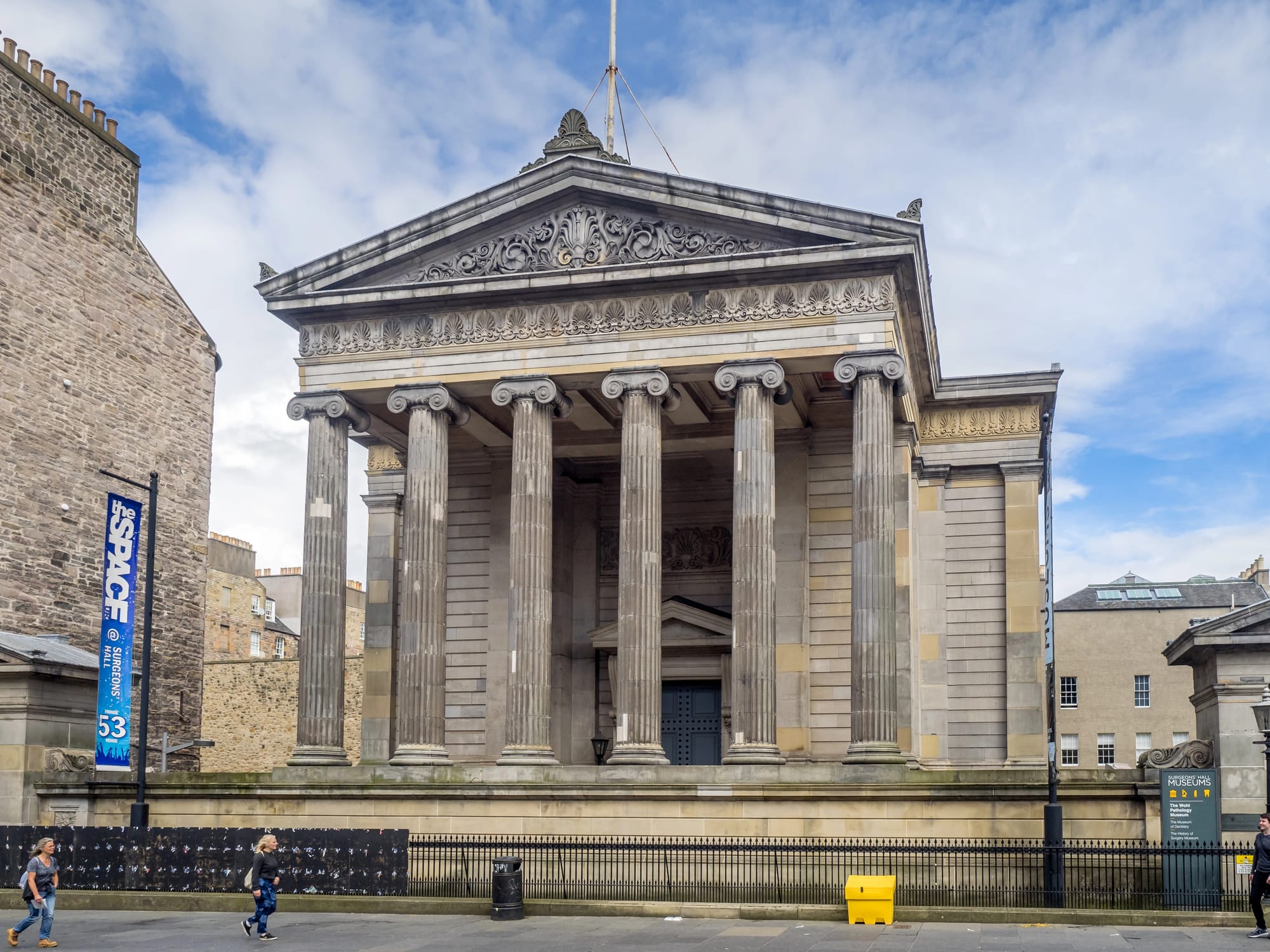
When Athens Met Athens: The Architecture of Ambition
Walk down Nicolson Street in Edinburgh and you'll encounter Surgeons' Hall, a magnificent Greek Revival building completed in 1832 by Scotland's leading Neoclassical architect, William Henry Playfair. Its six-column Ionic portico projects intellectual authority and surgical precision.
Now picture Cork's Courthouse on Washington Street, built around 1828 by the Pain brothers. Its grand Corinthian columns make an equally bold statement of civic pride.
Both cities earned their "Athens" nicknames through this shared architectural language. Edinburgh became the "Athens of the North," while Cork claimed the southern title. The contemporary construction of these landmark buildings reflects a parallel ambition: both cities viewed themselves as centres of enlightenment distinct from London.
The choice of classical orders even tells a story. Edinburgh's restrained Ionic suited academic pursuits, while Cork's ornate Corinthian reflected the confidence of a thriving mercantile port.
Modern Connections: From Student Competitions to Surgical Training
The relationship between Cork and Edinburgh extends well beyond history books. University College Cork maintains active partnerships with the RCSEd today.
Professor Gerry McKenna holds a Fellowship from the Faculty of Dental Surgery at RCSEd whilst serving as an Adjunct Professor at UCC. Cork dental students regularly compete in Edinburgh, with UCC's Mishaim Mian achieving second place in the prestigious RCSEd and Dentsply Sirona Skills Competition.
The RCSEd's educational network physically extends to Cork, with in-person training sessions hosted in the city, allowing Irish surgical trainees to access Edinburgh-standard education locally.
Ten Hill Place: Where Heritage Meets Hospitality (Sponsored Content: Gifted Stay)
Disclosure: Cork Safety Alerts received a complimentary stay at Ten Hill Place Hotel to feature this review. Book your stay now: https://www.tenhillplace.com
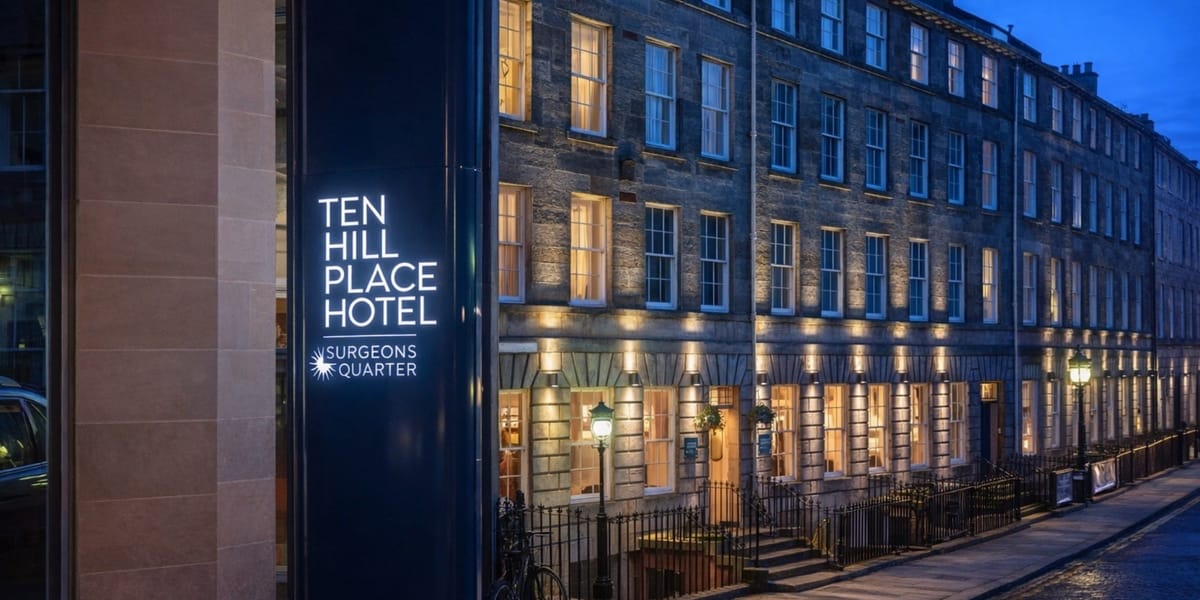
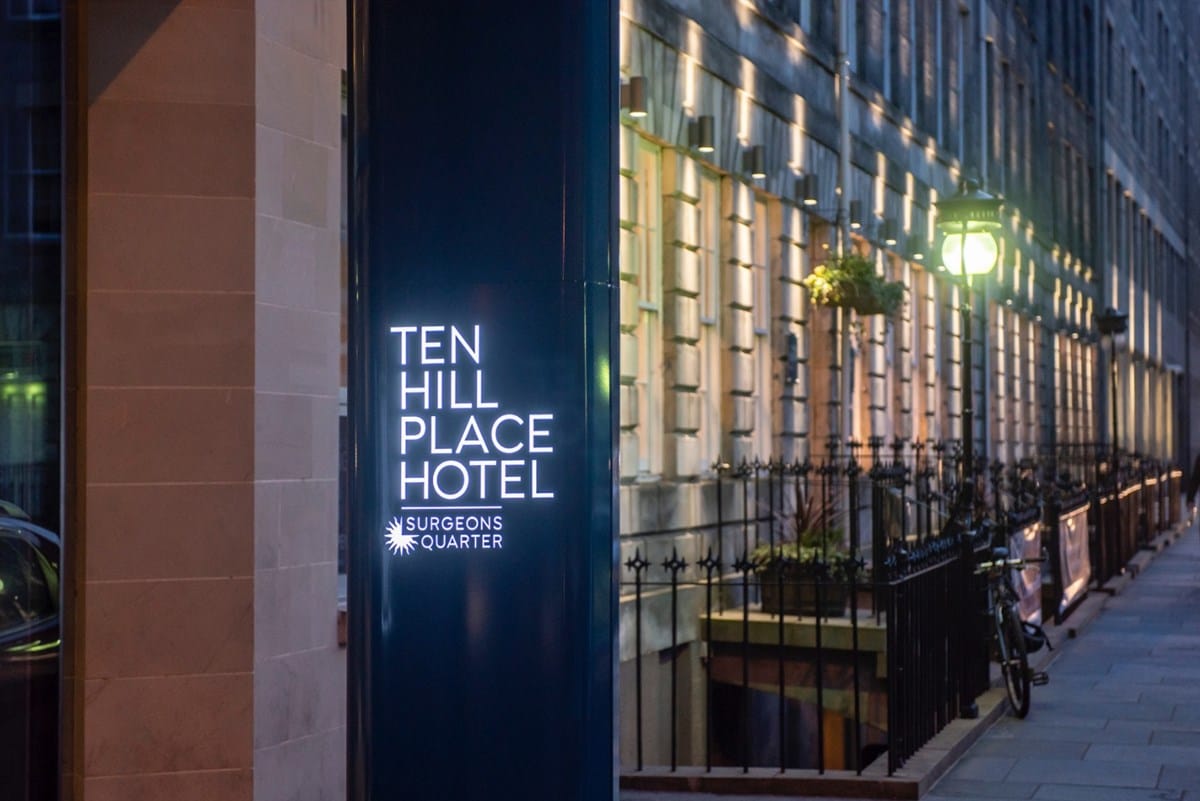
Directly adjacent to Surgeons' Hall sits Ten Hill Place Hotel, a property unlike any other in Edinburgh. Every penny spent on rooms, meals, or drinks returns directly to the Royal College of Surgeons of Edinburgh to fund surgical training worldwide, including programmes that benefit Irish surgeons.
This is hospitality with purpose.
From Riding School to Luxury Hotel
The site's history stretches back to 1764, when it operated as a riding school serving Edinburgh's gentry and military classes for over 60 years. Following its closure in 1828, Georgian tenements were built, housing everyone from Helen Clark, a tanner's sister whose 1825 probate inventory listed mahogany furniture and Napoleon medallions, to Daniel Mullen, a painter living there with his pregnant wife in 1957.
When the Royal College of Surgeons of Edinburgh opened the hotel in November 2006, it preserved the Georgian façade, converting the original front door of Number 10 into a window whilst maintaining the iron railings and front steps. The hotel launched with 77 rooms as a three-star property before upgrading to four-star status in 2011 following a £300,000 refurbishment.
The transformation accelerated in 2018 with an £8.5 million expansion that nearly doubled capacity to 129 bedrooms, making it the largest independent hotel in Edinburgh. The project stitched together neighbouring buildings, added a gym, and significantly expanded public spaces.
Design Philosophy: Elegance Over Clinical
The interior design team at Occa Design faced an intriguing challenge: create a space that honoured the surgical heritage without feeling like a hospital. Their solution was inspired.
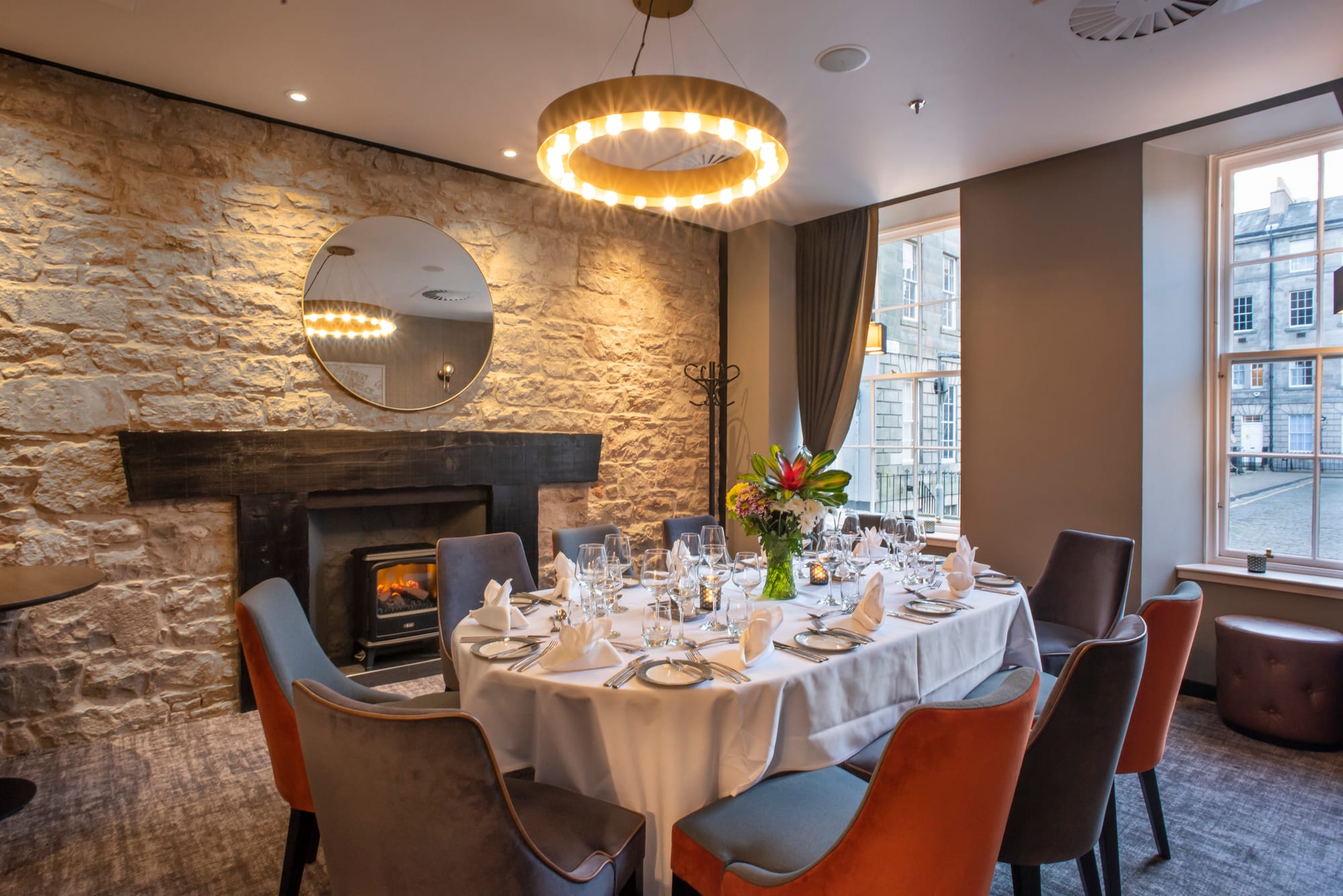
Rather than obvious medical associations, the design celebrates the site's equestrian past. Black metalwork references horseshoes and stable fittings. Rich leather upholstery evokes saddles and tack. Aged timber floors recall the worn planks of the original riding school. Furniture features buckle details and diamondback quilting, whilst exposed stonework reveals the building's Georgian bones.
The result is sophisticated and warm, a modern elegance that feels reassuringly historic without being a museum piece.
The Rooms: Character in Every Corner
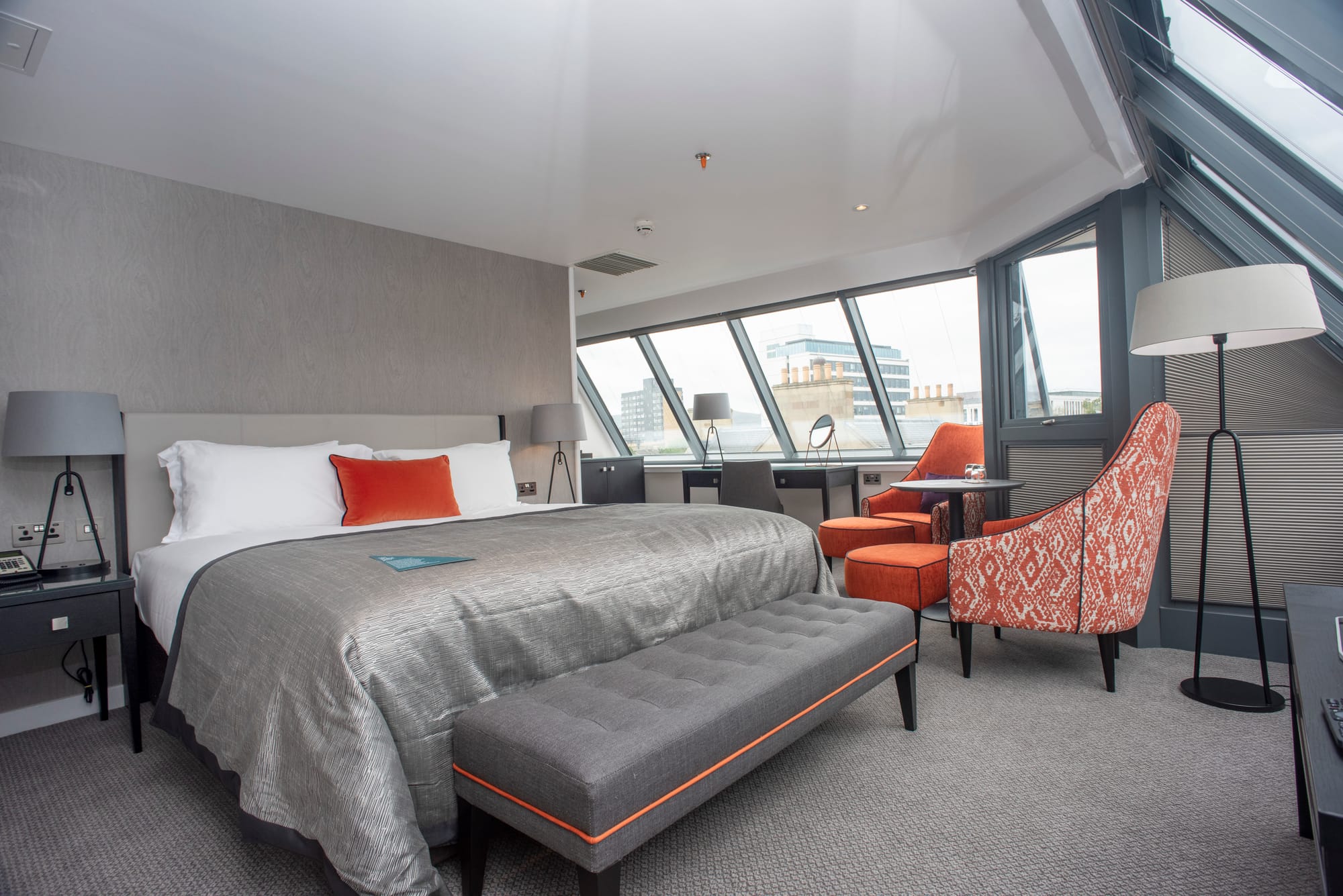
No two rooms are identical, a consequence of the historic building envelope that gives each space individual character often missing in new-build hotels.
Classic Rooms suit corporate travellers and short stays, featuring en-suite bathrooms, mini fridges, safes, and USB charging points.
Superior Rooms offer more spacious accommodation with towelling robes, slippers, and eight hand-made Scottish wild berry chocolates from Brodies of Edinburgh.
Skyline Junior Suites provide panoramic city views with separate seating and dining areas. The Skyline Package includes Brodies chocolates, a pamper bag with vanity sets and face masks, plus a mini drinks package featuring 1505 Gin, ale, and tonic.
For longer stays or larger groups, Hill Square Suites accommodates up to eight guests across four bedrooms. Located a stone's throw from the main hotel, it features a fully equipped kitchen, separate dining room, and elegant lounge with high ceilings. Guests enjoy full access to hotel amenities including the gym and room service.
Every room includes complimentary WiFi, hypoallergenic duvets, and a hospitality tray stocked with Brodies of Edinburgh products. The signature touch: a packet of Scottish wildflower seeds in every room, encouraging guests to plant biodiversity when they return home.
Drinks and Dining: Scottish Provenance
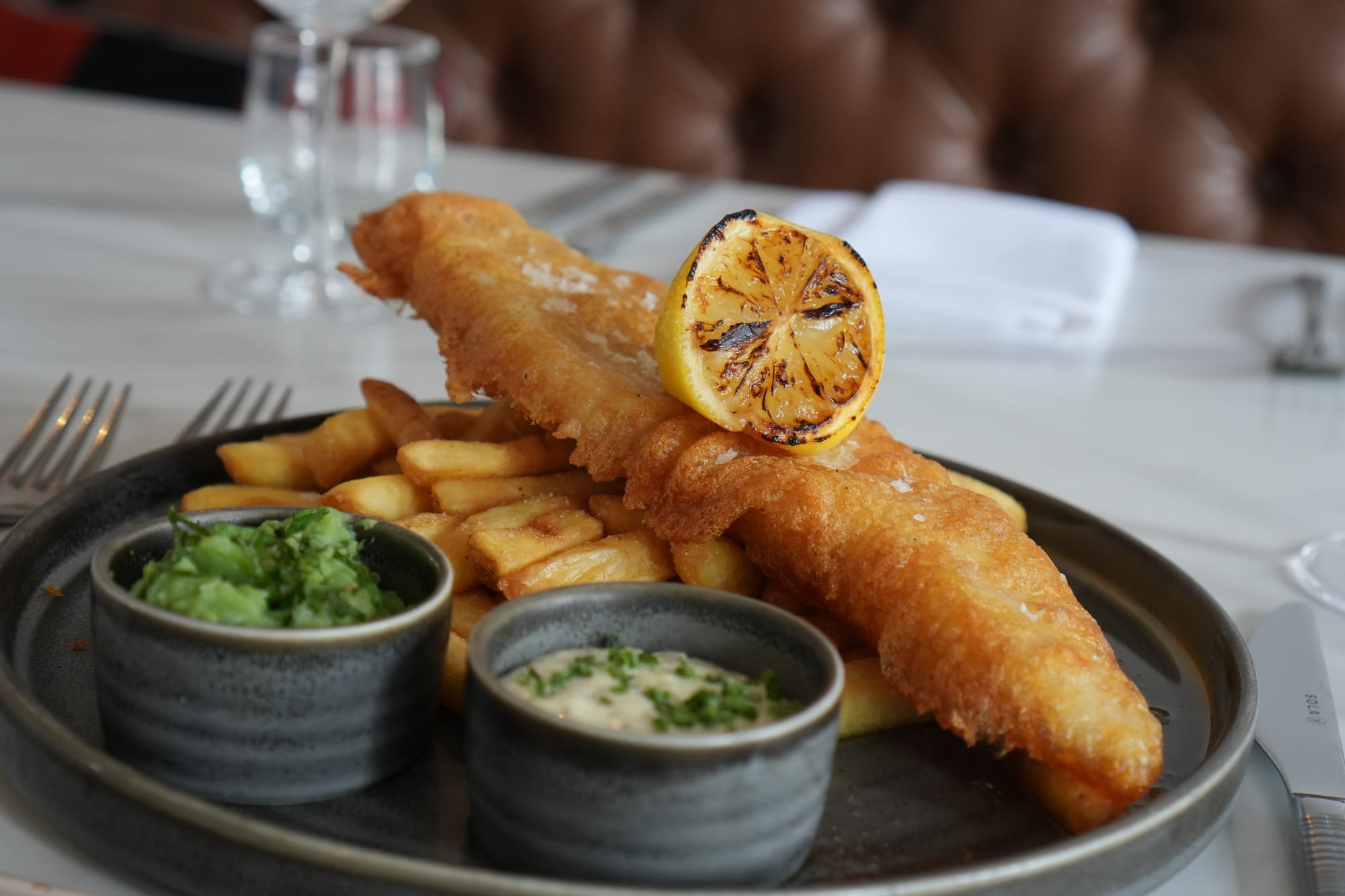
The hotel's food and beverage programme emphasises freshness, seasonality, and Scottish sourcing. The kitchen serves the finest meats from the Borders, venison from the Highlands, and the freshest fish from Scotland's shores.
The all-day dining concept runs from midday until late evening, offering small plates, burgers, and main courses alongside dedicated breakfast and children's menus. Private dining spaces include The Wee Snug for 14 guests and The Big Snug accommodating 50 for corporate dinners and celebrations.
The beverage programme maintains the hotel's partnership with renowned wine merchants Corney & Barrow, whilst the gin menu exclusively stocks Scottish distilleries. Gin Flights showcase the national spirit, and 1505 Bottled Ale commemorates the year the Barber-Surgeons of Edinburgh received their Seal of Cause.
The hotel's signature 1505 Gin, distilled with 15 botanicals including cumin, pink peppercorn, and gillyflower, offers an interesting parallel to Cork's craft spirits movement. In the Rebel City, Rebel City Distillery produces Maharani Gin from the historic Ford factory site, also emphasising exotic botanicals like pomelo and cassia. Both cities have transformed industrial and guild heritage into premium spirits for modern palates.
Cork visitors might notice "Knops Black Cork" on the drinks menu. Despite the name, this is a Scottish beer, though the linguistic coincidence creates a moment of recognition for guests from the Rebel County.
Scotland's Greenest Hotel
Ten Hill Place has held the Gold Award in Green Tourism continuously since 2009, celebrating 15 years of environmental leadership in 2024. The hotel was named Eco Hotel of the Year and ranks as Edinburgh's number one green hotel on TripAdvisor.
The property runs almost entirely on Scottish renewable energy, saving an estimated 790 tonnes of carbon annually, equivalent to 3,430 return trips to Rome. Six electric vehicle charging points serve guests making the transition to zero-emission transport, with long-term ambitions to restrict the car park exclusively to electric vehicles.
Plastic water bottles have been eliminated from bedrooms. A sophisticated Building Management System uses zoned temperature controls, deactivating heating and air conditioning in unoccupied rooms whilst boiler systems modulate based on real-time hot water demand.
Through partnership with Ecologi, guests staying two nights or more can opt out of daily housekeeping. In exchange, the hotel funds offsetting of 500kg of CO2e per night through certified carbon avoidance projects, reducing water and chemical usage whilst supporting global environmental initiatives.
Profits with Purpose
This is where Ten Hill Place fundamentally differs from every competitor in Edinburgh.
The hotel operates as the flagship asset of Surgeons Quarter, the commercial trading subsidiary of the Royal College of Surgeons of Edinburgh. While it competes commercially on booking platforms and corporate tenders, its financial endgame is purely philanthropic.
All distributable profits transfer back to the College to fund global surgical training, advance surgical practice and patient safety, provide humanitarian aid in conflict zones, and support remote and rural healthcare delivery.
The financial impact is substantial. After weathering pandemic losses exceeding £2 million in 2020, the hotel recovered aggressively. By 2024, Surgeons Quarter achieved its highest profit results on record, contributing almost £3 million to the RCSEd.
Every cocktail ordered, every room booked, every meal enjoyed directly funds life-saving surgical training, potentially including programmes benefiting Irish surgeons training in Cork hospitals.
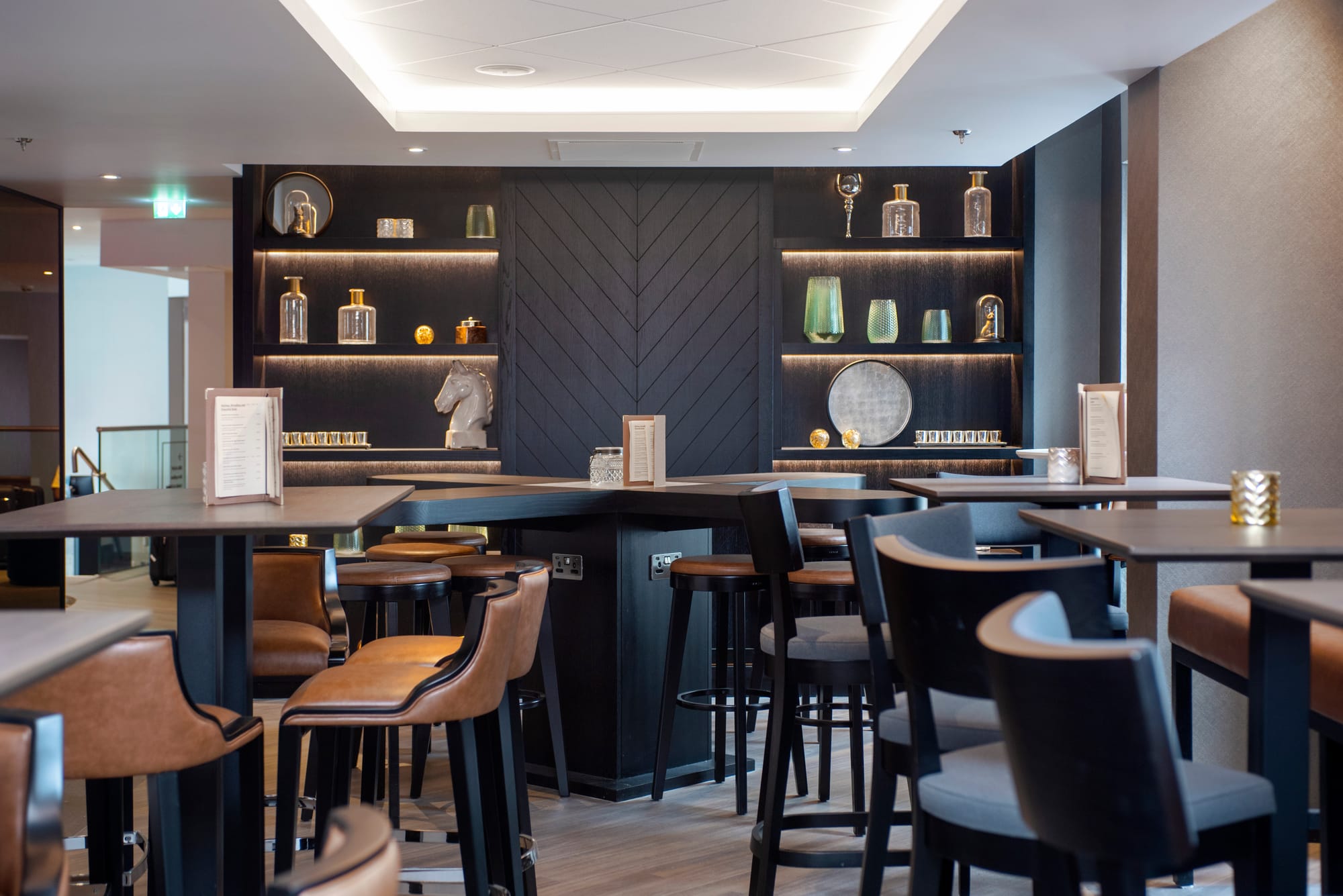
World-Class Meeting Space with Purpose
Surgeons Quarter extends beyond accommodation to offer exceptional conference and meeting facilities that embody 500 years of surgical precision and attention to detail. The venue complex can accommodate events from intimate boardroom sessions for five delegates to major conferences of 500, expandable to 1,500 through partnership with the adjacent Festival Theatre.
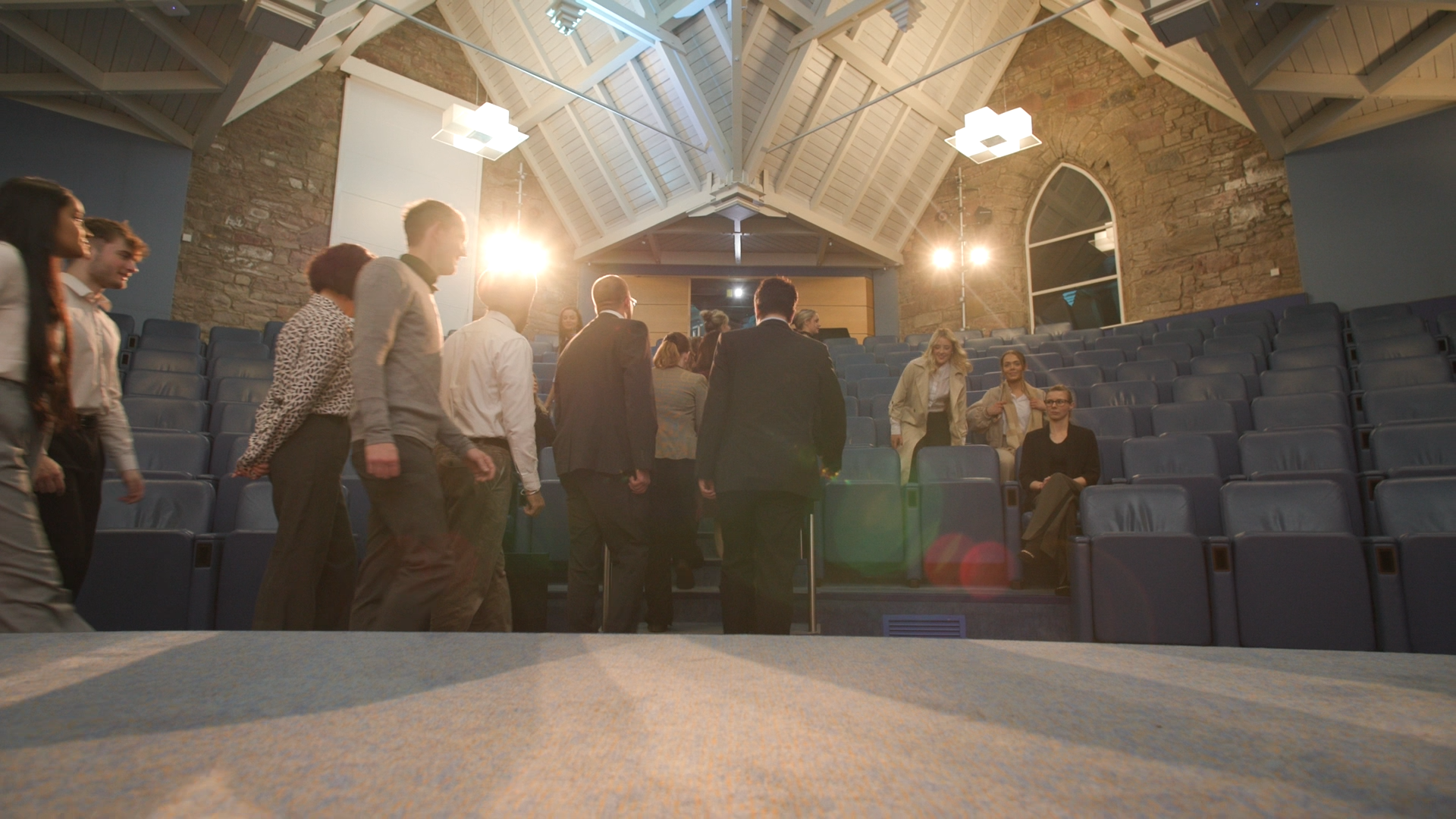
Choose between the grandeur of the 1832 Playfair Building with its Fellows Library, the contemporary sophistication of the Quincentenary Conference Centre's Wolfson Hall, the 158-seat tiered auditorium in the King Khalid Building, or the flexible Prince Philip Building spaces. For Cork-based businesses planning early-year strategy sessions, medical institutions organising Q1 training programmes, or pharmaceutical companies hosting professional events, Surgeons Quarter provides state-of-the-art presentation equipment in venues steeped in history.
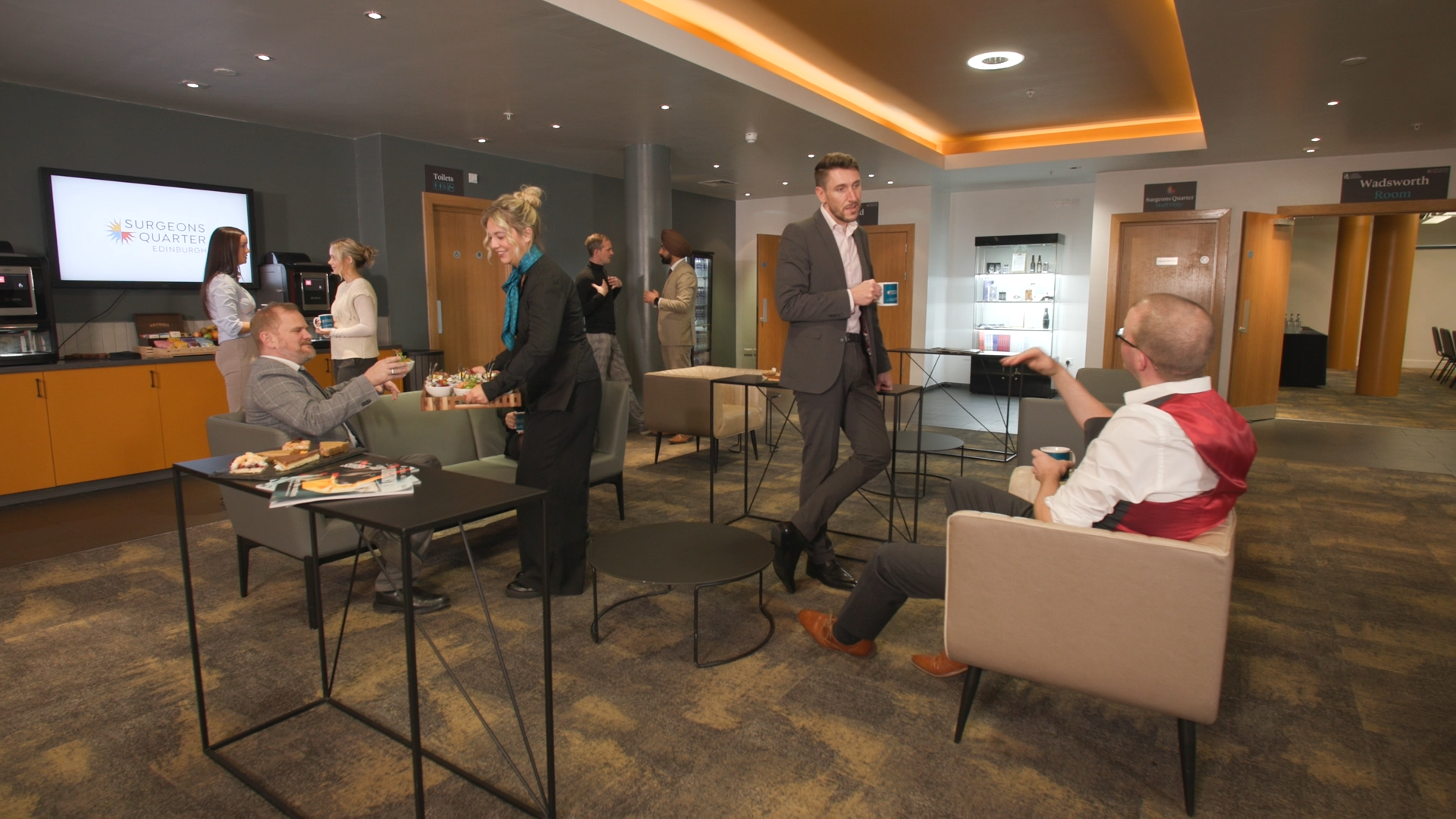
The experienced events team coordinates everything from coffee breaks to gala dinners, with preferential rates available for Fellows and Members of the Royal College of Surgeons of Edinburgh. Every conference booked contributes to surgical training worldwide, making Surgeons Quarter a venue where business excellence meets philanthropic impact.
Location and Connectivity
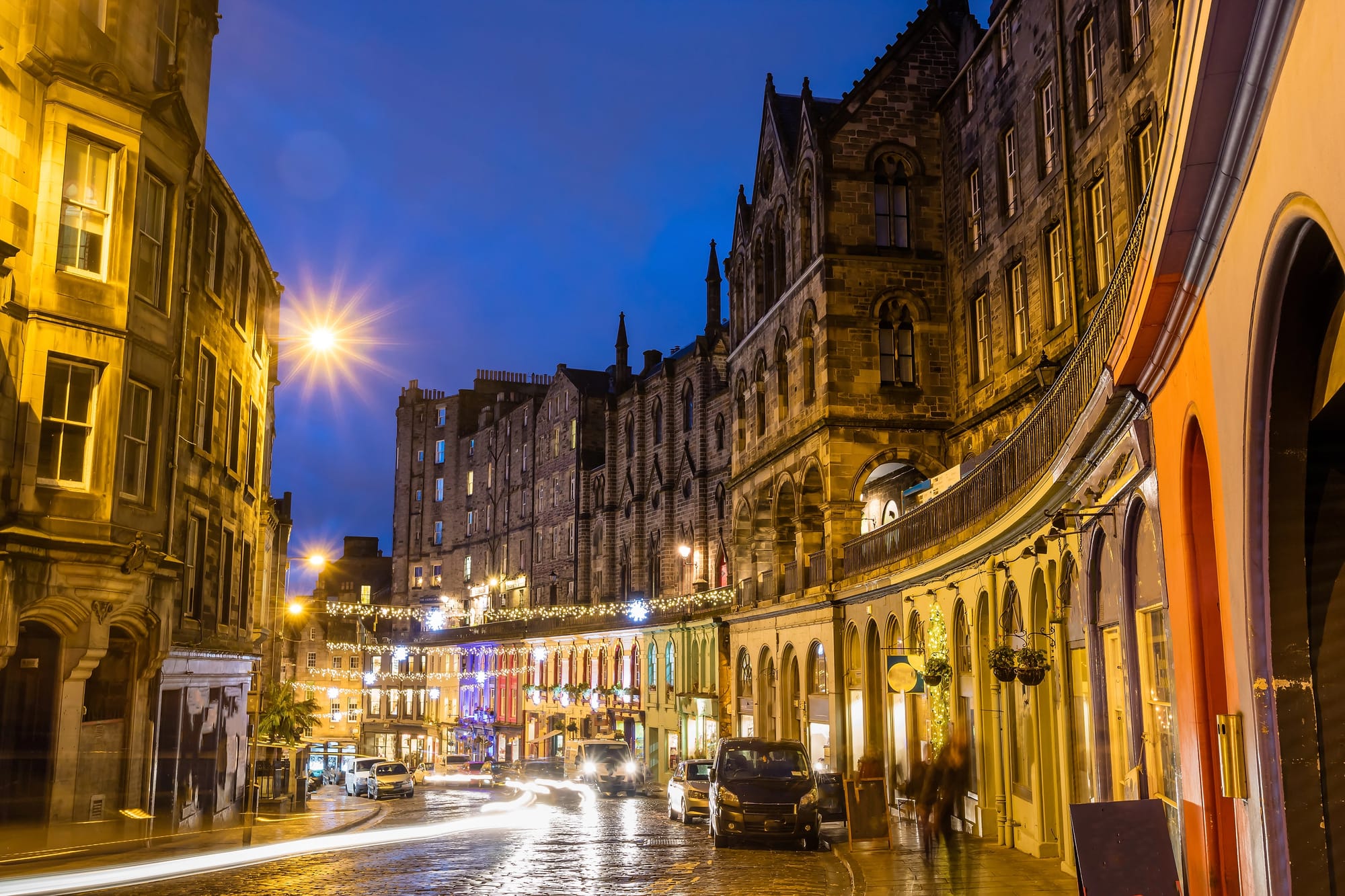
The hotel occupies a "Goldilocks" location in Hill Square: central but quiet. It sits mere moments from the Royal Mile and Edinburgh Castle, yet shielded from tourist thoroughfare noise. The Festival Theatre stands directly opposite, with the National Museums of Scotland adjacent.
Edinburgh Waverley Station is a ten-minute walk. The Airlink bus and Edinburgh Trams (St Andrew Square stop) provide airport connections. Unusually for city-centre accommodation, limited on-site parking is available at £20 per night.
Recognition and Service
The commitment to quality has earned recognition through numerous industry awards. The hotel holds a Four Star Gold rating from VisitScotland and was named National Winner for Conference Hotel of the Year 2017 at the Scottish Hotel Awards.
At the 2022 Prestige Hotel Awards, Ten Hill Place was a finalist for Scotland's Best Hotel Team and Scotland's Best General Manager (Mark McKenzie).
Guest reviews consistently highlight staff excellence, with visitors praising friendly, helpful, and professional service. Cleanliness scores average 9.3 out of 10, whilst comfort ratings reach 9.4. The quiet location away from main roads features prominently in positive feedback.
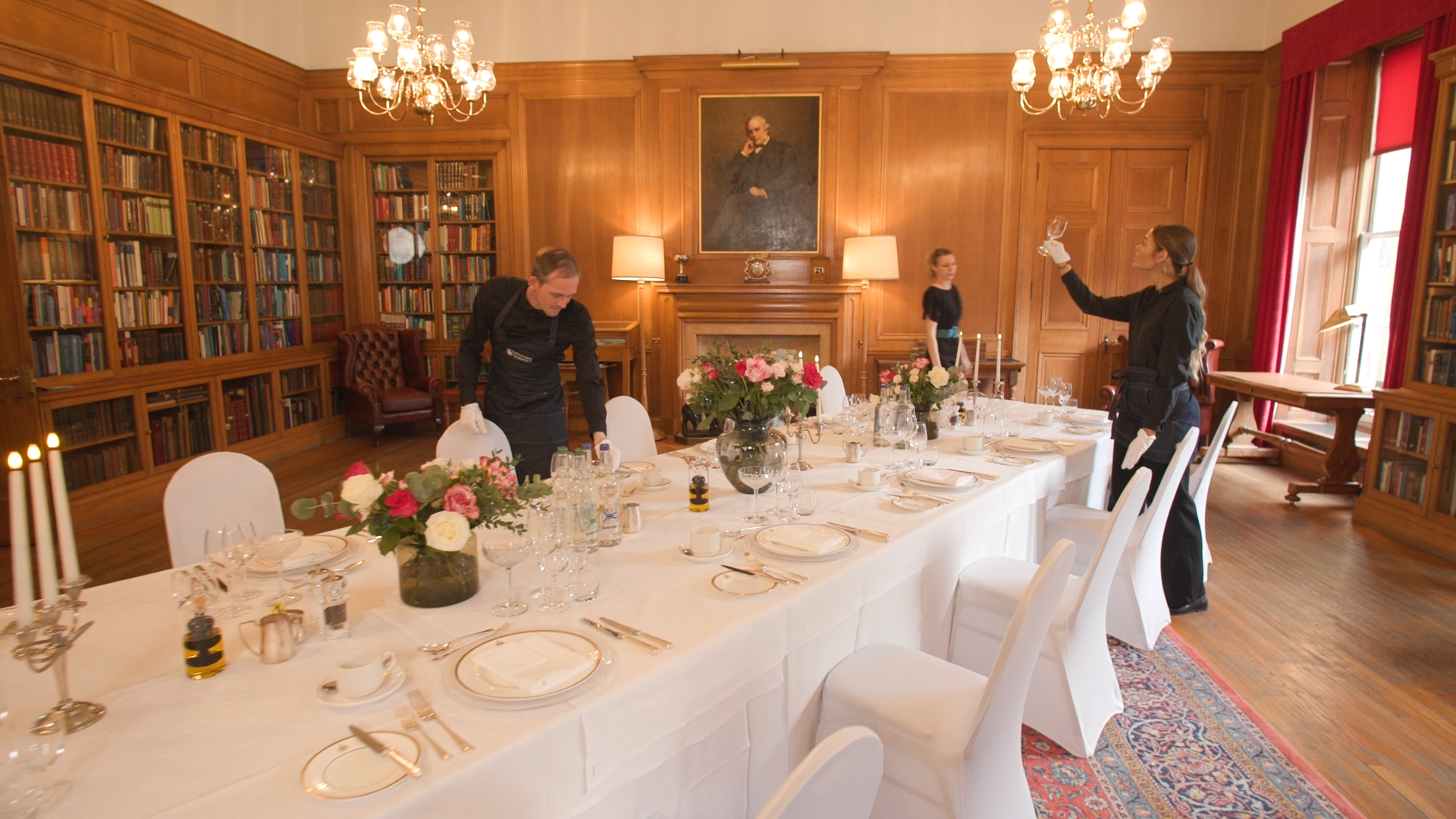
The Cork Connection
For Cork visitors to Edinburgh, Ten Hill Place offers more than luxury accommodation. It provides a tangible link to shared heritage where every night's stay funds training that benefits surgeons across Ireland and beyond.
Medical professionals from UCC attending RCSEd examinations or training programmes find it an appropriate home away from home, walking distance from examination halls where Cork's Margaret Anne Bulkley once proved her mettle as James Barry.
The hotel's location within the Surgeons Quarter provides easy access to Surgeons' Hall Museums, housing fascinating collections including instruments from the 19th century when Irish students dominated Edinburgh's medical school, and the macabre pocketbook made from William Burke's skin following his execution for the murders that targeted Edinburgh's vulnerable Irish immigrant community.
Looking Forward
Ten Hill Place represents successful synthesis of heritage preservation, commercial excellence, and philanthropic duty. From 18th-century riding school to 21st-century four-star hotel, the site has continually adapted to Edinburgh society's needs.
The 2018 expansion transformed the property from modest lodging into a major commercial engine for surgical advancement. By generating millions of pounds annually, Ten Hill Place ensures the Royal College of Surgeons of Edinburgh can continue its mission well into the future.
For guests, the hotel offers a rare opportunity: enjoying luxury and service whilst knowing patronage serves a cause far greater than shareholder profit. In the truest sense, it is hospitality supporting surgery, comfort funding care.
Book your stay now: https://www.tenhillplace.com
The Darker Threads of History
Not all connections between the cities tell comfortable stories. The infamous Burke and Hare murders of 1828 targeted Edinburgh's vulnerable Irish immigrant community. William Burke, though from County Tyrone rather than Cork, represented the marginalised Irish diaspora living in squalid conditions in the Cowgate and West Port.
The bodies they sold to anatomists like Dr. Robert Knox, then associated with the RCSEd, highlighted the grim reality: Irish immigrants fled poverty at home only to become commodified by Edinburgh's insatiable demand for cadavers.
Surgeons' Hall Museums today displays a pocketbook made from Burke's skin following his execution, a macabre artifact that serves as a visceral reminder of this dark chapter when Irish bodies became currency in the advancement of surgical science.
Raising a Glass to Parallel Traditions
The heritage distilling trend has taken remarkably similar paths in both cities. Edinburgh's 1505 Gin celebrates surgical history, whilst Cork's Rebel City Distillery produces Maharani Gin from the historic Ford factory site.
Both spirits emphasise exotic botanicals and industrial heritage. Both cities have transformed their historic guild and manufacturing legacies into premium products for the modern palate. A visitor could conceivably toast Cork's distilling revival with Edinburgh's surgical spirit, creating a full-circle moment of cultural exchange.
Looking Forward
Today's relationship between Cork and Edinburgh has evolved from migration to partnership, from exploitation to collaboration. When Cork medical students compete in Edinburgh or UCC professors hold Edinburgh Fellowships, they walk paths first blazed by Margaret Anne Bulkley over two centuries ago.
The Greek Revival columns still stand in both cities, silent witnesses to an enduring connection built on ambition, innovation, and the belief that knowledge transcends borders.
For Cork visitors to Edinburgh, Ten Hill Place offers more than accommodation. It provides a tangible link to a shared heritage where every night's stay funds the training that benefits surgeons across Ireland and beyond.
From the Lee to the Forth, the bond between these two "Second Cities" remains strong, written in stone, forged in determination, and continually renewed through education and exchange.