Cork Marks 40 Years Since Chornobyl with New Marina Park Sculpture
Cork City Council and Chornobyl Children International have unveiled the "Chornobyl Mother" sculpture at Marina Park, marking 40 years since the 1986 nuclear disaster.
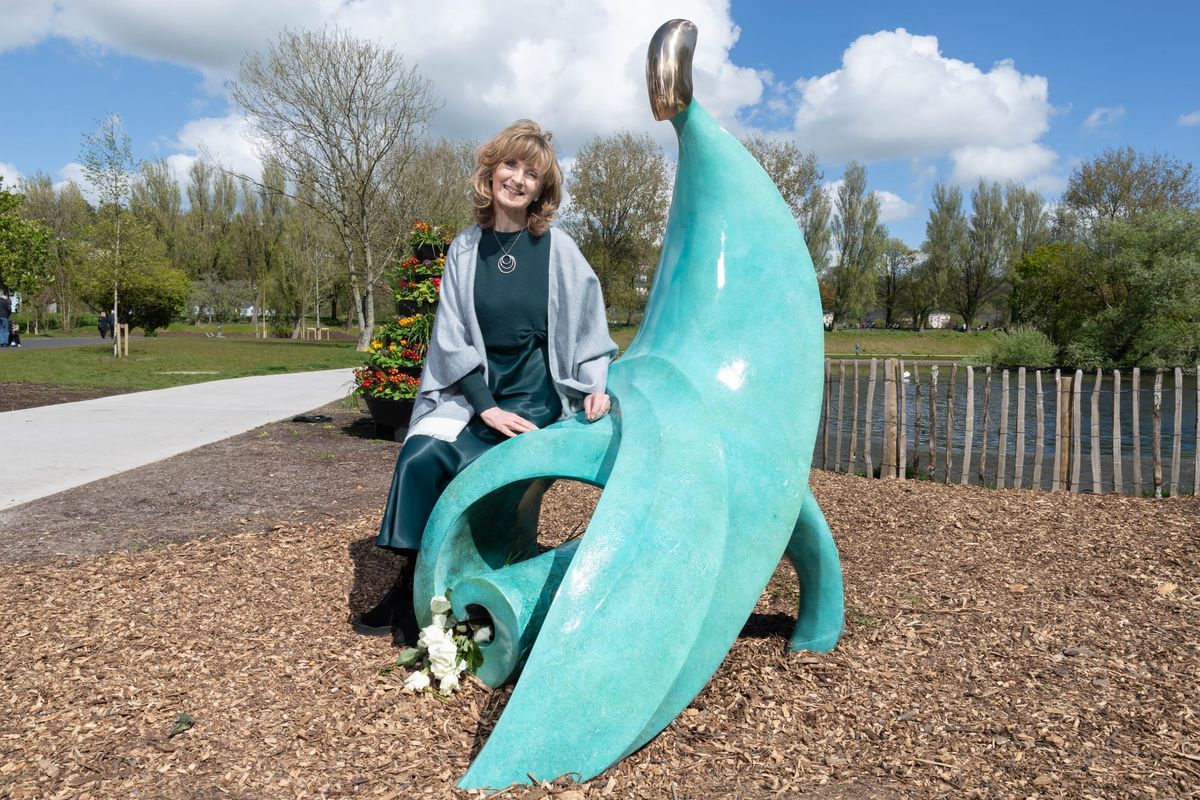
Cork City Council and Chornobyl Children International have unveiled a new public sculpture at Marina Park to mark the 40th anniversary of the Chornobyl nuclear disaster, honouring the victims of the 1986 catastrophe and the decades of humanitarian work that followed.
The sculpture, "Chornobyl Mother," was created by Irish sculptor Sandra Bell and unveiled by Lord Mayor Cllr Fergal Dennehy at the city's newly redeveloped Marina Park on Monday morning. The ceremony brought together civic leaders, survivors, families, and volunteers who have been part of the humanitarian response to Chornobyl, which has seen €110 million worth of aid delivered to affected regions.
Lord Mayor Cllr Fergal Dennehy said:
"Cork City Council was delighted to provide this prominent public space for such a meaningful piece of work. Its positioning here, in the peace and tranquillity of the regenerated Atlantic Pond, stands as a powerful symbol of hope.
As well as remembering the countless lives lost and touched by the 1986 nuclear disaster, we reflect too on the countless lives touched and transformed by Adi Roche and her charity, Chornobyl Children International, and its army of volunteers and supporters. Her vision has brought light into the darkest of circumstances, and Cork is immensely proud to stand with her and with all who continue this vital mission.
We in Cork City Council are proud to play our part in recognising and supporting the extraordinary humanitarian work that she continues to lead from Cork."
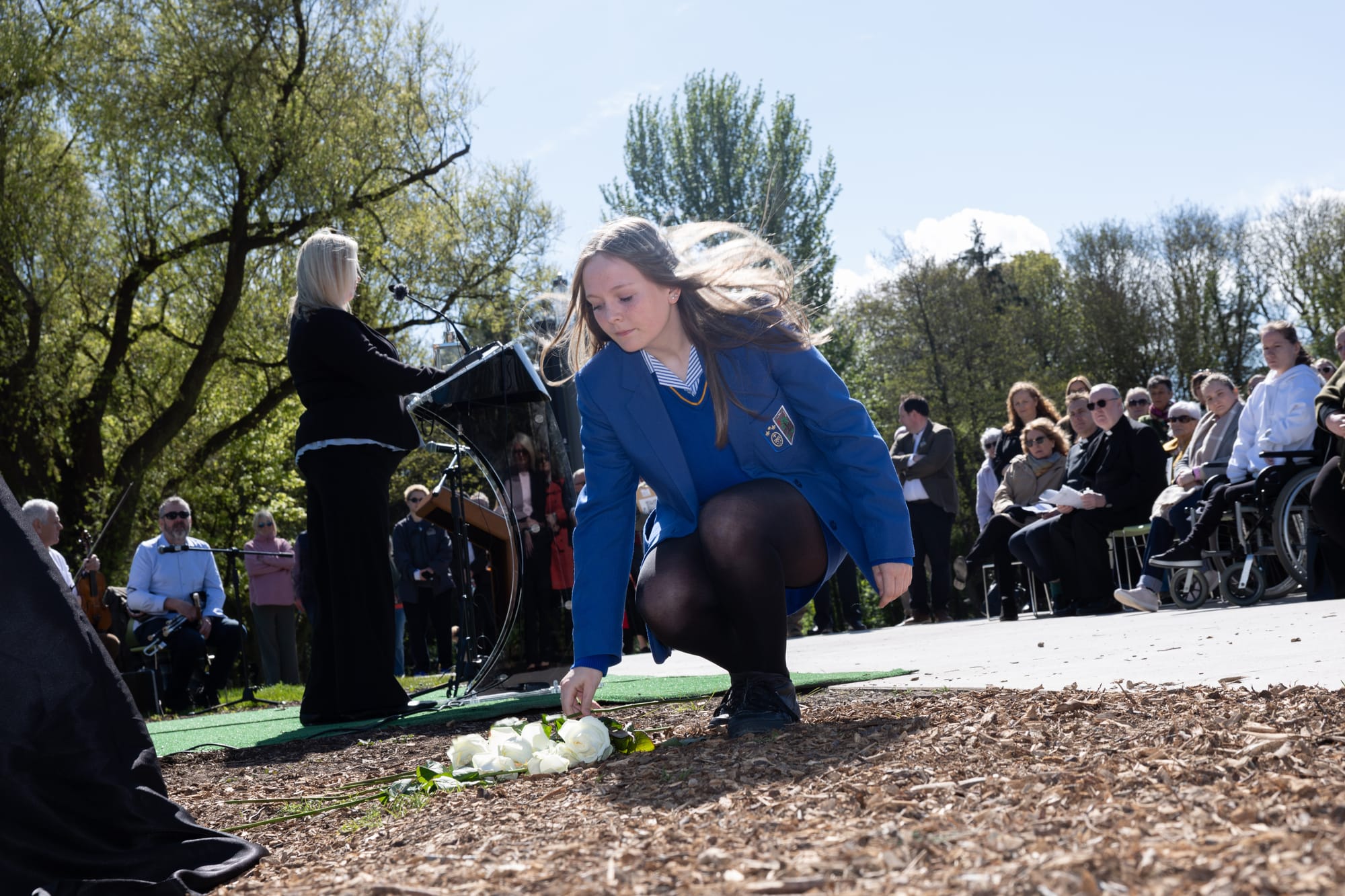
Serving as both a memorial and a symbol of resilience, the sculpture honours the innocent victims of the 1986 disaster and reflects the enduring strength of the women, families, and communities affected across generations. It is installed at a prominent position at the Atlantic Pond within Marina Park.
Adi Roche, Voluntary CEO of Chornobyl Children International, said:
"'Chornobyl Mother' gives form to memory and compassion. It ensures that the voices and experiences of those affected are neither forgotten nor overlooked."
She added:
"This anniversary is not just a memorial for a disaster; it is a celebration of a miraculous Irish intervention. We took a tragedy that occurred thousands of miles away and made its victims our own. We proved that while radiation lingers for centuries, and Chornobyl is forever, but the half-life of Irish kindness is infinite."
The unveiling is part of a wider programme of commemorations led by Chornobyl Children International, including a media campaign, advocacy banners on Cork's Connolly Hall and Dublin's Liberty Hall, a Chornobyl Children's Art Exhibition at Cork City Council, and a recognition ceremony at Áras an Uachtaráin on Friday 24 April. An Post is also supporting the anniversary with a special two-week commemorative postmark.
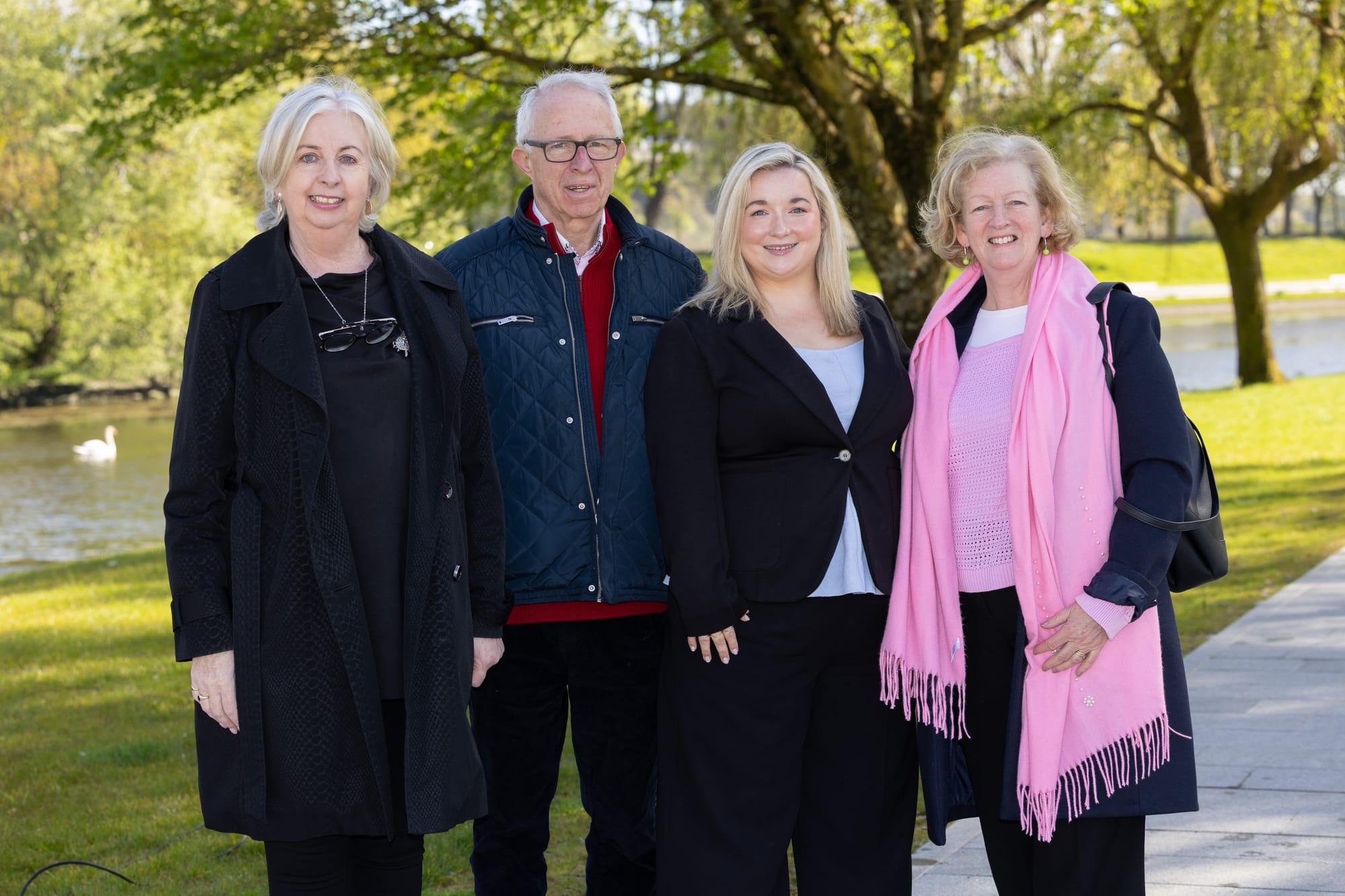
Chornobyl Children International is the only NGO in the world recognised by the United Nations to support the victims and survivors of Chornobyl. The annual United Nations Chornobyl Remembrance Day was ratified in 2016 following Adi Roche's landmark address to the UN General Assembly.
Why "Chornobyl" and not "Chernobyl"?
You may notice this article uses the spelling "Chornobyl" rather than the more familiar "Chernobyl." Both refer to the same place, but the difference reflects which language the name is drawn from.
"Chernobyl" is a transliteration of the Russian name (Чернобыль), which became the dominant spelling in English during the Soviet era and in the immediate aftermath of the 1986 disaster, when most international coverage was routed through Moscow.
"Chornobyl" is the correct transliteration of the Ukrainian name (Чорнобиль). The city is located in Ukraine, and the Ukrainian language uses a different vowel in the first syllable. Following Russia's full-scale invasion of Ukraine in February 2022, there has been a widespread and deliberate move among governments, international organisations, and media outlets to use Ukrainian place names rather than their Russian equivalents, as a mark of respect for Ukrainian identity and sovereignty. This applies to several well-known place names, including Kyiv (not Kiev), Lviv (not Lvov), and Chornobyl (not Chernobyl).
Chornobyl Children International, Cork City Council, and the Irish government all use the Ukrainian spelling, and Cork Safety Alerts follows that convention.
The sculpture is located at Marina Park, Cork. View on Google Maps